2026-01-14/Stories/7 MIN READ
Abstract / TL;DR
- The goal is always the same: make your face look more balanced — not wider, not longer, not flatter.
- Once you know your face shape, you’re mainly adjusting three dials: sides (tight vs full), top (height vs flat), front (forehead exposed vs fringe).
- Not sure what you are? Take a straight-on selfie and trace your outline in your phone’s Markup tool — you’ll see the shape immediately.
Ever walked into a barbershop with a photo of your favorite celebrity…
and walked out thinking something’s off?
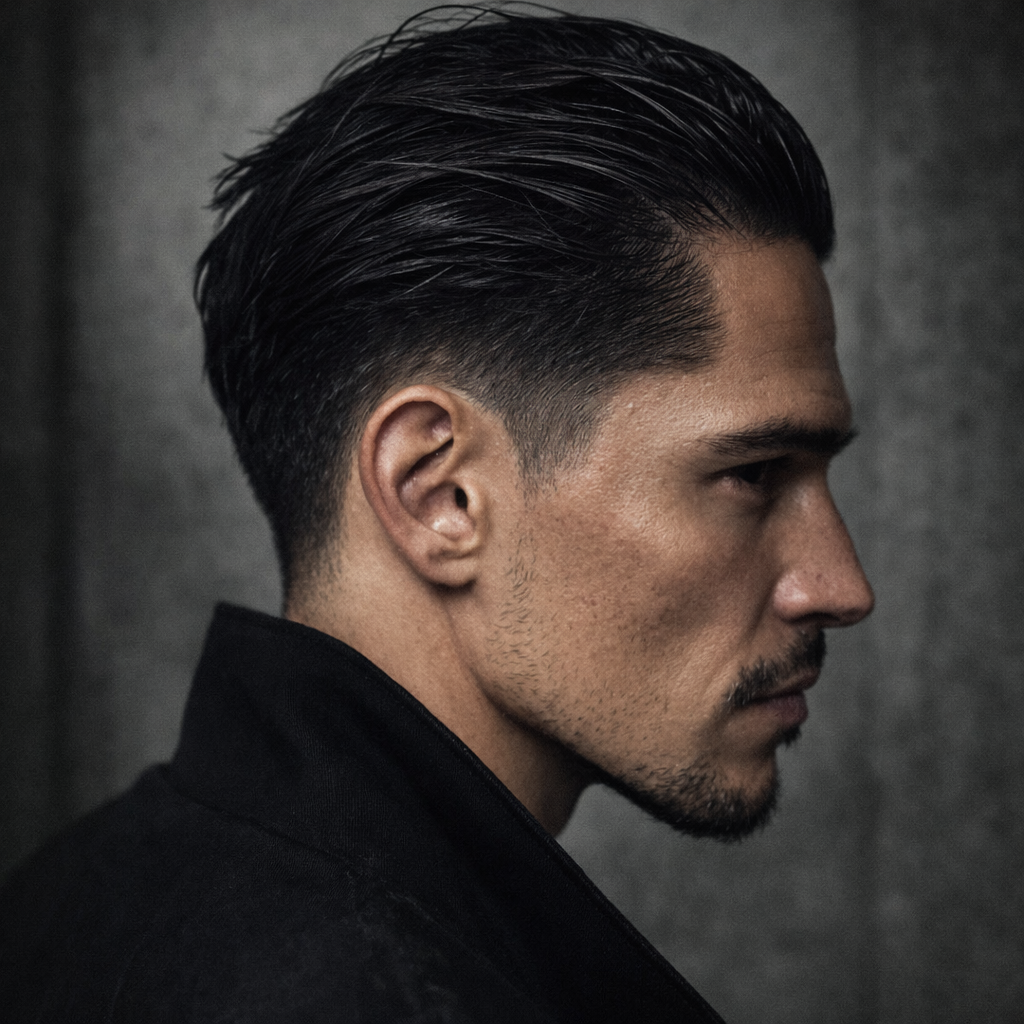
Most of the time, the haircut wasn’t “bad” — it just wasn’t designed for your face shape.
A good haircut isn’t only about trends. It’s geometry.
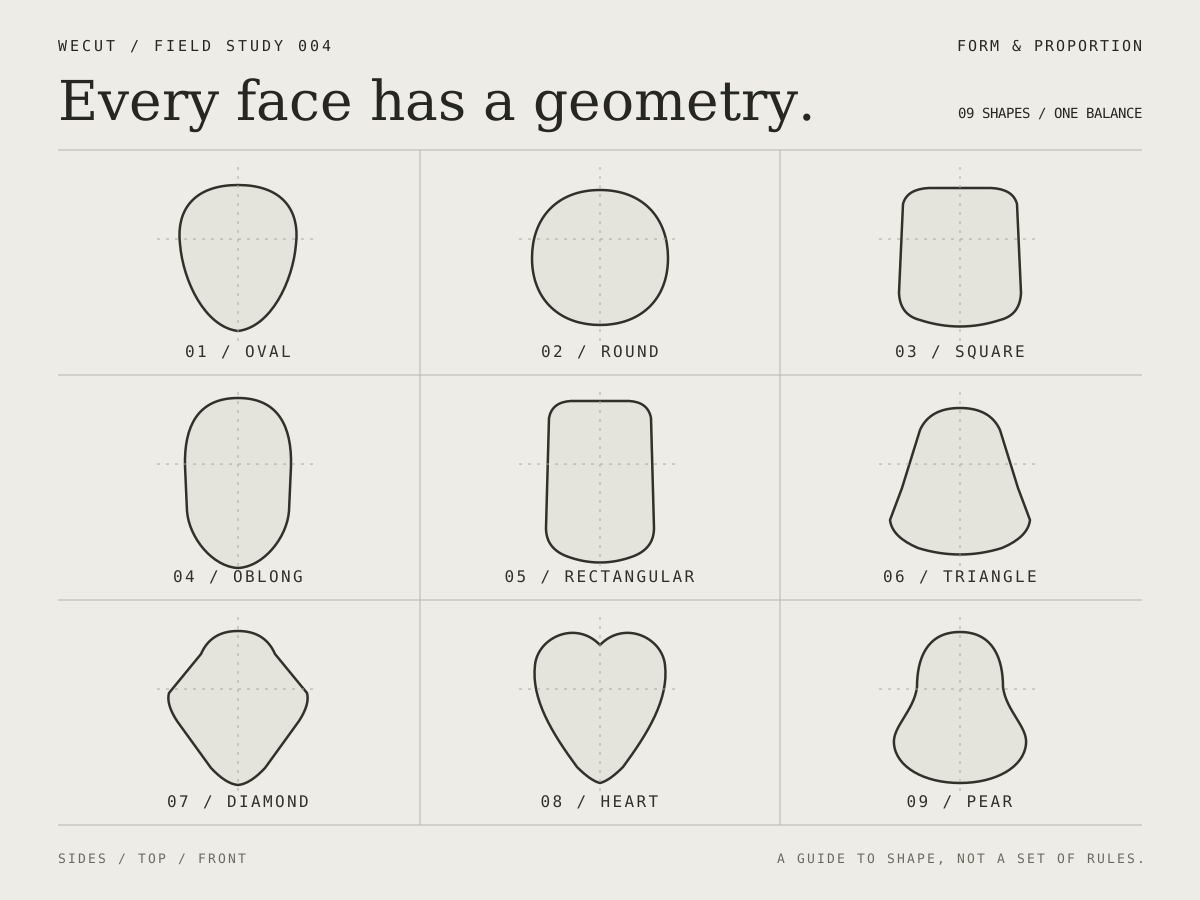
This guide breaks down 9 face shapes and gives you a clear framework:
- what to balance
- what to ask for
- what to avoid
The Core Idea: Haircuts Are 3 Adjustable Dials
Before we get into face shapes, simplify hair into three dials:
- Sides: tight (fade) → sharper, often makes the face look longer; fuller → softer, often makes the face look wider
- Top: higher → elongates; lower/flat → shortens
- Front: forehead exposed (back/side part) → defines structure; fringe down → youthful, but shortens the face
Every face-shape “rule” below is just these dials in different positions.
1) Oval: The Most Versatile — But Don’t Shorten It
Traits: widest near the brow, softer angles, but often a defined jaw; naturally balanced.
Goal: keep the balance; avoid making the face look shorter.
Works well:
- tighter sides + hair swept back / side-parted
- clean, open forehead styles that show the jawline
Avoid:
- heavy fringe / forward crops that visually shorten the face
Facial hair note:
- light stubble or even a mustache can work — the key is keeping the jawline visible.
2) Round: Add Height, Create Angles, Avoid Extra Width
Traits: width ≈ height; cheekbones are widest; jawline is softer.
Goal: stretch it slightly toward oval — tight sides + a bit of height.
Works well:
- lean/tight sides (low to mid fade)
- texture + height through the front/top (blow-dryer helps a lot)
- off-the-face styling (up/back or side-swept)
Avoid:
- bulky sides (makes the face look wider)
- fringe / forward-heavy styles (shortens the face)
Facial hair note:
- a mustache alone can emphasize width
- a short beard with a more angular outline can visually elongate.
3) Square: You’ve Got Jaw Power — Soften the Edges
Traits: strong jaw, clear angles; not as long as rectangular.
Goal: keep the strength, but add a touch of softness.
Works well:
- keep some fullness/layering on the sides (not ultra-sheared)
- slightly looser, more natural texture up top
Avoid:
- harsh, ultra-tight, ultra-angular cuts that amplify squareness
- heavy fringe that shortens the forehead (often looks overly youthful)
Facial hair note:
- clean shave or short, shaped stubble usually looks best.
4) Oblong (Long): Don’t Add More Height — Add Balance
Traits: elongated face, strong jaw.
Goal: avoid extra length — reduce height, add softness/width.
Works well:
- softer sides (avoid very high fades)
- rounded silhouettes; texture without towering height
- if growing hair: keep length on the sides as well, not only on top
Avoid:
- tall, narrow styles (they exaggerate length)
- high-and-tight cuts that make the head look even longer
Facial hair note:
- goatee/anchor styles can work, but avoid making the chin look sharper/longer.
5) Rectangular: Like Oval, But More Angular
Traits: higher forehead, stronger symmetry, broader chin/jaw.
Goal: soften the angles with texture and side volume.
Works well:
- textured styles with a little fullness on the sides
- classic side parts that aren’t overly tight
Avoid:
- super harsh, lean, angular cuts that overemphasize structure
- chin straps / low rider beards that carve the jaw even harder
Facial hair note:
- clean-shaven or short stubble with natural outlines is safest.
6) Triangle: Jaw Wider Than the Upper Face — Build the Top
Traits: jawbone wider than cheekbones; narrower brow/forehead.
Goal: bring presence to the upper half — especially the forehead corners.
Works well:
- coverage near the forehead (curtain corners, fringe elements, softer flow)
- leaving some length/weight up top and near the temples
Avoid:
- very tight sides and a narrow top (makes the jaw feel even wider)
Facial hair note:
- the jaw already dominates — clean shave often looks best.
7) Diamond: Cheekbones Widest — Avoid “Tall + Narrow”
Traits: widest at cheekbones; narrower forehead and chin.
Goal: soften and widen the top corners; don’t sharpen the chin.
Works well:
- less height; a rounder, wider silhouette up top
- width at the temples/corners to balance cheekbones
- natural facial hair outlines (or fuller beard for some)
Avoid:
- high, narrow styles and pointed/elongated chin beards
8) Heart: Wide Forehead/Cheekbones, Narrow Chin — Go Soft & Textured
Traits: broader upper face, narrow chin; often with a widow’s peak.
Goal: add softness and movement; don’t overemphasize the narrow chin.
Works well:
- loose texture, waves, natural movement
- off-the-face styles that are relaxed (not slicked flat)
- pieces at the sides to soften the forehead width
Avoid:
- stiff, sharp, high-contrast shapes that make the top look wider and the chin smaller
Facial hair note:
- short stubble usually balances well; avoid making the chin look sharper.
9) Pear: Jaw Widest — Move the Visual Weight Up
Traits: narrower forehead, widest at the jaw.
Goal: create width and presence through the top.
Works well:
- broader shapes up top (volume + width, not narrow)
- softer sides (avoid ultra-tight high fades)
Avoid:
- high-and-tight cuts that make the top look narrow and the jaw look heavier
Facial hair note:
- more structured, angular beard outlines can help sharpen the jaw’s silhouette.
How to Find Your Face Shape in 30 Seconds
- Take a straight-on selfie (camera at eye level; no tilt).
- Open your editor → Markup tool.
- Trace your outer outline: forehead → cheekbones → jaw → chin.
- Match what you see:
- width ≈ height → Round
- cheekbones widest → Diamond
- jaw widest → Triangle / Pear
- clearly long → Oblong / Rectangular
- naturally balanced → Oval
Final Note: Rules Are Tools, Not a Cage
These guidelines raise your odds — they don’t remove your freedom.
You can break the rules, as long as you understand the trade-off (more youthfulness, more edge, more softness, etc.).
Just keep the core objective: Make the face look balanced.